
If you owe more on your home than it is worth, one of the first questions you will ask is what a short sale is. It is a fair question, and the answer matters more than most homeowners realize.
In simple terms, a short sale means selling your home for less than your mortgage balance, with your lender’s permission. This guide explains what a short sale is, how it compares to foreclosure, and how the process works in Illinois.
What Is a Short Sale in Real Estate?
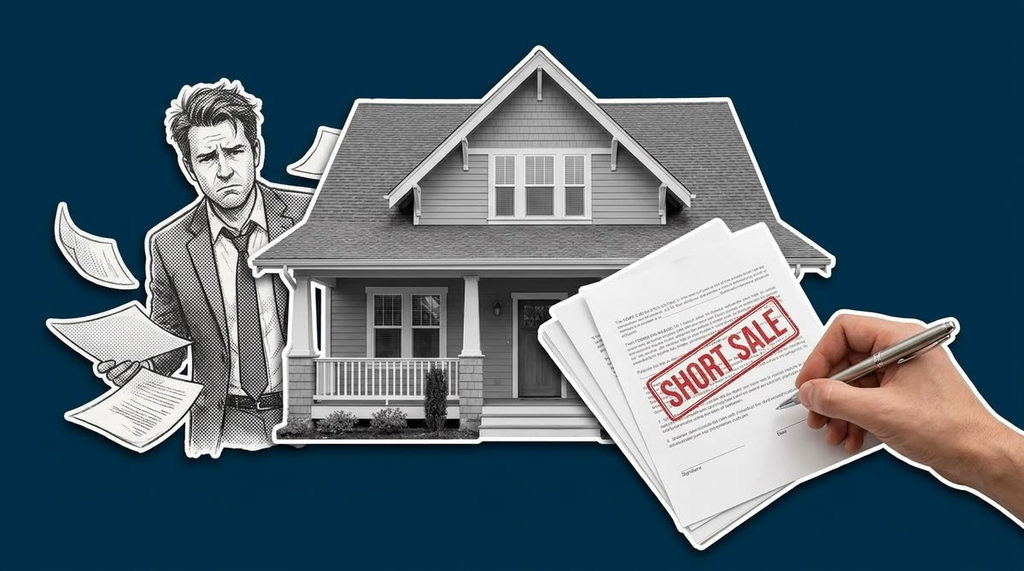
So, what is a short sale in real estate? It is a sale where the price is less than what you owe. The Consumer Financial Protection Bureau describes it as a type of loss mitigation, meaning a way for a struggling borrower and a lender to avoid foreclosure.
The word “short” refers to the gap. If you owe $250,000 and the home sells for $220,000, the sale is $30,000 short of paying off the loan.
The key point is that the lender must agree. You cannot simply list the house below your payoff and close. The lender has to approve the price and release its lien, or the sale cannot happen.
Because it is still a sale, you will have to leave the home. A short sale does not let you keep the house. It lets you exit on more controlled terms than foreclosure would.
Why Would a Lender Agree to a Short Sale?
This surprises many homeowners. Why would a lender take less than it is owed? In most cases, the answer is that the alternative costs the lender even more.
Foreclosure is slow and expensive. The lender pays for attorneys, court costs, property upkeep, and taxes, and then sells a vacant house that may have deteriorated. A short sale often nets the lender a better result.
That is why understanding what a short sale is also means understanding the lender’s math. The lender compares what it would recover from a foreclosure to what it would recover from your offer.
According to NerdWallet, the servicer handles your loan day to day, but the investor who owns the loan has the final say on price and terms. Common investors include Fannie Mae and Freddie Mac.
Who Actually Qualifies for a Short Sale?
Being underwater is usually not enough. Lenders generally want to see a documented financial hardship, such as job loss, divorce, illness, or a big increase in expenses. This is why our article on selling after a job loss covers many of the same pressures.
Typical hardship situations include the following:
#1 A job loss or a major cut in income.
#2 A divorce or separation that leaves one income carrying the mortgage.
#3 A medical emergency with large bills.
#4 A death in the family that changes household income.
#5 An adjustable rate or tax increase that made payments unaffordable.
If you can still afford your payments but simply owe more than the home is worth, a short sale is unlikely to be approved. Lenders are not required to accept less when you can pay.
Short Sale vs Foreclosure: The Core Differences
Now to the comparison most people are searching for. Short sale vs foreclosure comes down to who controls the outcome, how the process ends, and how much long-term damage you carry afterward.
In a short sale, you stay in control of the listing and the buyer search, though the lender approves the deal. In a foreclosure, the lender takes the case to court, which ends in a forced sale of your home.
Here is how the two compare side by side:
#1 Who starts it: You start a short sale by asking for approval. The lender starts a foreclosure by filing a lawsuit.
#2 Who controls the sale: You and your agent market the home in a short sale. In foreclosure, the property is sold at a court-supervised sale.
#3 Credit impact: Both hurt your credit, but a short sale generally does less damage, according to Experian.
#4 Waiting period to buy again: Conventional lenders typically require a shorter wait after a short sale than after a foreclosure.
#5 Public record: A foreclosure creates a court case. A short sale is a private transaction between you, the lender, and the buyer.
#6 Your move-out timing: A short sale gives you more say over the closing date. Foreclosure timelines are set by the court process.
The short sale vs. foreclosure decision isn’t always yours to make, since a short sale requires lender approval. But when it is available, many homeowners find it the gentler path.
Our article on foreclosure and your credit goes deeper on the credit side of this comparison.
What Is a Foreclosure, and How Does It Work in Illinois?
To compare short sale vs foreclosure fairly, you need to know how foreclosure works where you live. Illinois is a judicial foreclosure state, meaning the lender must file a lawsuit and win a court judgment before it can sell your home.
That court process gives Illinois homeowners some time and some rights. According to Illinois Legal Aid Online, a borrower can reinstate the mortgage within 90 days of being served with the summons by paying all past-due amounts.
There is also a redemption period. Nolo explains that for residential property in Illinois, it ends at the later of seven months after service or three months after the judgment, and no sale can happen before then.
The whole process often takes a year or longer. That window helps because it gives you time to pursue a short sale, a cash sale, or another solution before you lose the home.
If you are already in this situation, our page on selling a house in foreclosure in the Chicago Southland explains how we can help.
Does a Short Sale Stop a Foreclosure?
This is one of the most common questions, and the honest answer is no, not automatically. Asking for a short sale does not pause a foreclosure case in Illinois.
The lender can keep pursuing the lawsuit while it reviews your request. That means court deadlines keep running, even while you wait for a short sale answer.
This is why it matters to understand what a short sale is before you start. Missing a court date while waiting on the lender can cost you rights you cannot get back.
If a foreclosure case has been filed, speaking with an Illinois foreclosure attorney or a HUD-approved housing counselor is a smart step. Our post on waiting too long to sell a house explains why timing matters.
The Short Sale Approval Process, Step by Step
The short sale approval process is where most of the work and frustration happens. Here is how it typically unfolds, though every servicer has its own forms and pace.
#1 Contact your servicer. Call the number on your mortgage statement and ask about a short sale or other loss mitigation options. The FTC notes that the servicer must approve the short sale before you list the home as one.
#2 Submit a hardship package. Expect to provide a hardship letter, pay stubs, bank statements, tax returns, and a current mortgage statement. Our guide to the paperwork needed to sell a house can help you get organized.
#3 Establish the home’s value. The servicer will usually want a broker price opinion or an appraisal to decide what the house is worth.
#4 List the home and gather offers. You typically work with an agent who has short sale experience, and the price must be realistic, not wishful.
#5 Submit a buyer’s offer for review. The lender reviews the offer, the buyer’s terms, and your finances before deciding.
#6 Receive the approval or a counteroffer. The lender may approve, reject, or counter. Approval letters usually expire.
#7 Close the sale. The lender releases its lien, the buyer pays, and you hand over the keys.
The short sale approval process rewards patience and organization. A complete, accurate package at the start is the best way to avoid delays.
Why Second Mortgages Can Complicate the Short Sale Approval Process
Many homes carry more than one lien. If you have a second mortgage or a home equity line, that lender must also approve the short sale.
Experian points out that second lien holders often stand to collect little or nothing, so they may refuse or demand a cash payment before releasing their claim.
This is a common reason a short sale falls apart. The short sale approval process is only as fast as its slowest lender.
If you have multiple liens, ask your agent or attorney early how each lender will be handled. It can save weeks of uncertainty.
How Long Does a Short Sale Take?
Patience is a big part of any answer to what a short sale is. Timelines vary widely by servicer, investor, and how complete your paperwork is.
Freddie Mac publishes its own short sale requirements for the loans it owns. Lender review alone typically takes about a month to a few months, and many short sales take several months from start to finish.
Compare that to a conventional cash sale. Our article on how long selling a house for cash takes shows how much faster a deal can move when no lender approval is needed.
The short sale approval process can feel slow because so many parties are involved. That is normal, but it is also why homeowners facing a hard foreclosure deadline should have a backup plan.
Can You Stay in Your Home During a Short Sale?

Yes, you can typically stay while the home is listed and the lender reviews offers. You remain the owner until closing.
But because a short sale is a sale, you will need to move out by the closing date. In that sense, a short sale is not a way to keep your home. It is a way to leave on your own terms.
Foreclosure is different. The court handles the sale, and the new owner takes possession after the process is complete.
Understanding what a short sale is also means understanding that you get more say over timing than you would in foreclosure. Many homeowners value that control, especially when they need time to relocate.
What Is a Deficiency Judgment, and Why Does It Matter?
This may be the most important detail in any short sale. A deficiency is the difference between what you owe and what the sale brings in.
Illinois law allows lenders to seek a deficiency judgment in a foreclosure, as Nolo explains. That means you could still owe money after the house is gone.
The same risk applies to a short sale unless the lender agrees otherwise. The CFPB advises asking the lender to waive the deficiency before you go through with a short sale.
The FTC adds that you should get the waiver in writing. A verbal promise is not enough.
Before signing any short sale approval, read the letter carefully. It should clearly say whether the lender is forgiving the remaining balance. If it does not, ask a lawyer before you proceed.
Will You Owe Taxes After a Short Sale?
Possibly, and this trips up many people. When a lender forgives debt, the IRS generally treats the forgiven amount as income, as explained in IRS Topic 431.
The tax rules have also changed recently. A long-standing exclusion for forgiven mortgage debt on a main home generally applies only to debt discharged before January 1, 2026, or under a written arrangement made before that date.
Other exclusions, such as insolvency or bankruptcy, may still apply. You would typically report an exclusion on IRS Form 982.
Because the rules are technical, a tax professional should review your situation before closing. This is one reason why what is a short sale is never just a real estate question.
Does a Short Sale Hurt Your Credit?
Yes, but usually less than a foreclosure. Both events can stay on your credit report for years, and both make new borrowing harder.
The short sale vs. foreclosure comparison really shows up in the waiting period for a new mortgage. Fannie Mae publishes its rules in its Selling Guide, and it treats short sales and foreclosures differently.
As commonly summarized, conventional loans require a shorter wait after a short sale than after a foreclosure, with shorter periods possible for documented extenuating circumstances. Government-backed loans have their own rules.
Always confirm the current waiting periods with a lender before making plans. Guidelines can change, and your loan type matters.
For more on the credit side, see our article on foreclosure and your credit.
What Are the Pros and Cons of a Short Sale?
Like any option, a short sale has trade-offs. Weighing them honestly helps you decide whether it fits your situation.
The main advantages include:
#1 Less damage to your credit than foreclosure in most cases.
#2 More control over the process and your move-out date.
#3 A private transaction instead of a public court case.
#4 A shorter wait before you can qualify for another mortgage.
The main disadvantages include:
#1 Approval is never guaranteed, and the lender can say no.
#2 The process is slow and paperwork-heavy.
#3 You may still face a deficiency or a tax bill if things are not negotiated in writing.
#4 Other lienholders can block or delay the deal.
Knowing what a short sale is means seeing both columns clearly. It is a useful tool for some homeowners and a poor fit for others.
What Are the Alternatives to a Short Sale?
A short sale is one of several tools. Before you commit, compare your options with a clear head.
#1 Reinstatement. You pay everything past due to bring the loan current. This works if your hardship was temporary.
#2 Loan modification. The lender changes your loan terms to lower the payment. It helps if you want to keep the home.
#3 Forbearance. The lender pauses or reduces payments for a set time.
#4 Deed in lieu of foreclosure. You voluntarily transfer the property to the lender in exchange for release from the loan.
#5 Bankruptcy. In some cases, it can address mortgage debt or a deficiency, and it requires legal advice.
#6 A traditional or cash sale. If your home is worth more than you owe, you may not need lender approval.
Our article on whether to sell or refinance a house you cannot afford walks through how to think about these choices.
When a Regular Cash Sale Makes More Sense
Here is something many people miss. A short sale only applies when the sale price falls below your mortgage payoff. If you have equity, you are not looking at a short sale at all.
Many homeowners fall behind on payments while still owning a house worth more than the loan. In that case, a fast sale can pay off the mortgage and leave you with money, without lender approval or a hardship package.
Our post on selling before foreclosure explains why timing can protect your equity. And our comparison of a pre-foreclosure sale versus waiting for the bank shows what waiting can cost you.
If you are underwater, a cash buyer generally cannot make the debt disappear, and we would rather tell you that plainly. In that situation, a lender-approved short sale, with proper legal guidance, may be the right path.
That honesty matters because distressed homeowners are frequent targets for bad actors. Before working with anyone, read our guide on whether selling a house for cash is a scam and our list of questions to ask a cash home buyer.
Common Mistakes to Avoid in a Short Sale

Short sales have many moving parts, and small errors can be expensive. These are the ones we see most often.
#1 Waiting too long. The earlier you act, the more options you have, especially in a judicial foreclosure state like Illinois.
#2 Ignoring court deadlines. A pending short sale request does not stop the foreclosure case.
#3 Skipping the deficiency waiver. Always confirm in writing that the lender will not pursue the leftover balance.
#4 Overlooking second liens. Every lienholder must agree, or the deal can collapse.
#5 Paying upfront fees to strangers. The FTC warns against companies that promise to stop foreclosure for a fee.
#6 Feeling rushed into a bad deal. Our article on being pressured to sell a house fast covers how to slow down and protect yourself.
Avoiding these mistakes will not guarantee approval, but it will put you in a much stronger position. It also keeps the short sale approval process moving instead of stalling.
Where to Get Free, Trusted Help
You do not have to work this out alone. HUD-approved housing counselors provide free or low-cost guidance on foreclosure options, and the CFPB offers a tool to find one near you.
Illinois Legal Aid Online also publishes detailed, plain-language information about the foreclosure process. It is worth reading before you talk to any lender or buyer.
The National Association of Realtors also keeps a resource page on short sales and foreclosures that explains how these transactions work from the agent’s perspective.
If a short sale is in your future, an experienced Illinois real estate attorney can review the approval letter and the deficiency language. That review is often worth the cost.
Final Thoughts: What Is a Short Sale, and Is It Right for You?
Let us pull it together. What is a short sale? A short sale is a lender-approved sale for less than you owe, usually used to avoid foreclosure when you cannot afford the home and owe more than it is worth.
The difference between a short sale and foreclosure is control and consequences. A short sale usually means less credit damage and more say over the process, but it requires lender approval and careful paperwork.
The short sale approval process is slow and demanding, and it does not stop a foreclosure case on its own. Protect yourself by tracking every deadline and getting every promise in writing.
If you have equity in the home, you may not need a short sale. And if you are unsure where you stand, talking through your numbers is the best first step.
If you are behind on payments in the South Suburbs, our team at Sell To Dynasty can review your situation and explain your options honestly. We will tell you if a short sale, a cash sale, or another route fits best.