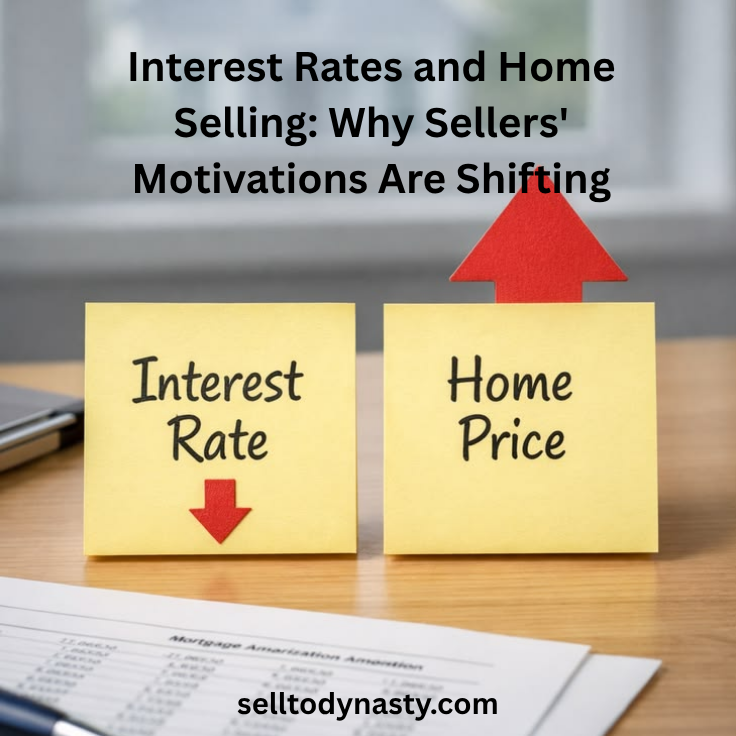
For the past few years, interest rates and home selling have been locked together in a way that reshaped the entire housing market. When mortgage rates jumped from the ultra-low pandemic era to today’s levels, millions of homeowners simply stopped listing their homes, because moving meant trading a cheap monthly payment for a much more expensive one.
That connection between interest rates and home selling is still very real in 2026, but it is starting to shift significantly, and understanding that shift matters if you are weighing whether to sell this year.
This article walks through where rates actually stand right now, why the relationship between interest rates and home selling has loosened, and what is really driving sellers to list their homes even when the math on a new mortgage still feels uncomfortable.
Where Mortgage Rates Actually Stand Today
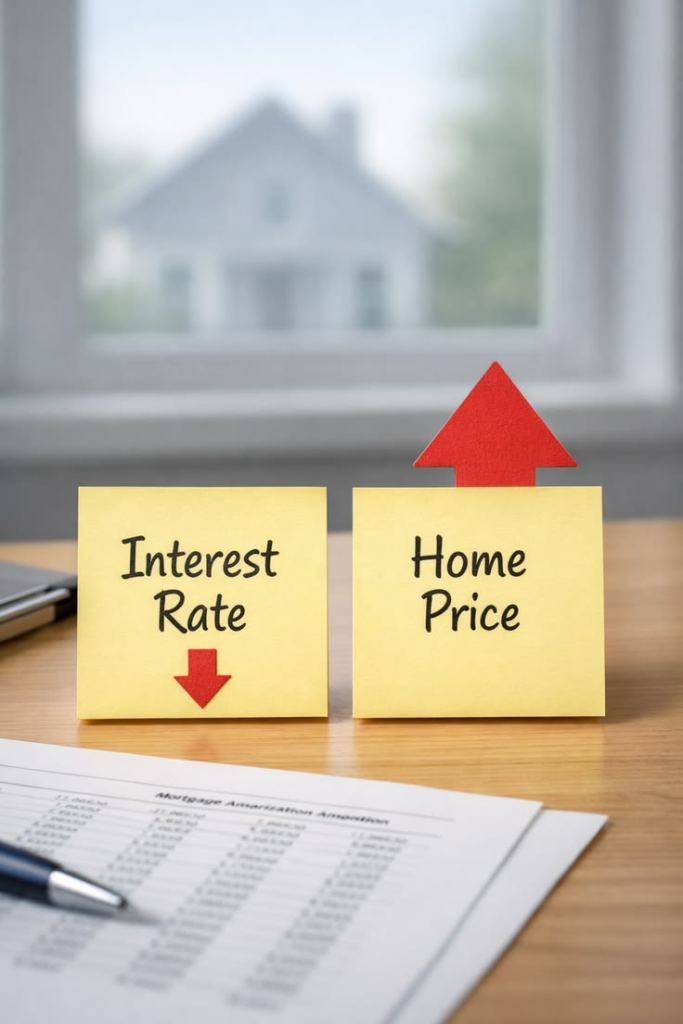
Any honest conversation about interest rates and home selling has to start with real numbers instead of guesses. According to Freddie Mac’s Primary Mortgage Market Survey, the 30-year fixed-rate mortgage averaged 6.66 percent as of late August 2026, essentially flat from the prior week and only slightly higher than a year earlier.
That is a meaningfully different environment from the sub-3 percent rates many homeowners locked in during 2020 and 2021. It is also a more stable environment than the sharper swings the market saw in 2022 and 2023, which is part of why the link between interest rates and home selling is starting to behave differently than it did during the initial rate shock.
The Lock-In Effect: Why Interest Rates and Home Selling Got Stuck Together
Economists call the phenomenon behind this the mortgage rate lock-in effect, and it explains most of the tension between interest rates and home selling over the last several years. Homeowners who refinanced or bought at 3 percent faced the prospect of moving to a 6 or 7 percent rate on their next home, even if the new home cost the same amount.
That math kept millions of otherwise willing sellers on the sidelines, since staying put often saved hundreds or even thousands of dollars a month compared to buying again at current rates. Research cited by housing analysts estimates the lock-in effect has suppressed hundreds of thousands of home sales nationally, tightening inventory and keeping the connection between interest rates and home selling unusually strong for an extended stretch.
Why the Lock-In Effect Is Finally Loosening
Here is where the relationship between interest rates and home selling is genuinely changing. As more time passes, fewer homeowners are still sitting on those rock-bottom pandemic-era rates, because refinancing activity, new purchases, and simple time have gradually shifted the distribution of outstanding mortgage rates.
By early 2026, the share of homeowners with mortgage rates above 6 percent grew close to matching, and in some data sets surpassed, the share still below 3 percent. That shift matters enormously for interest rates and home selling trends, because it means fewer sellers are giving up an irreplaceable deal just to list their home.
Real estate agents are already reporting this change firsthand. A national survey of agents found that roughly one in three sellers this year were willing to give up a sub-5 percent rate to list, a clear signal that interest rates and home selling are no longer locked together as tightly as they were in 2023 and 2024.
The Real Reasons Sellers Are Listing Despite High Rates
If interest rates alone do not fully explain today’s seller behavior, what does? According to that same agent survey, life circumstances are now the dominant driver, not rate timing. The connection between interest rates and home selling is real, but it is no longer the only variable in the equation.
#1. Job relocation. A new position or a transfer does not wait for the Federal Reserve, and many sellers are choosing career opportunity over holding out for a better rate.
#2. Divorce or separation. Splitting a household almost always requires selling the shared home, regardless of what mortgage rates happen to be doing that month. If this applies to you, our guide on selling a house during divorce covers the practical steps involved.
#3. Downsizing for retirement. Older homeowners with significant equity are increasingly willing to sell and buy smaller with cash, sidestepping the interest rate question almost entirely.
#4. Inherited property. Heirs frequently need or want to sell an inherited home regardless of the rate environment, especially when the property sits through probate and carries ongoing carrying costs.
#5. Growing families needing more space. The desire for a larger home remains one of the most common motivations tracked by the National Association of Realtors year after year, even when financing costs more than sellers would like.
#6. Health or mobility needs. Single-story living or proximity to family and caregivers can outweigh the financial penalty of a higher rate, particularly for older sellers.
The National Association of Realtors’ own 2025 Profile of Home Buyers and Sellers backs this up, showing that proximity to friends and family has now overtaken job location as a top motivation, a sign that lifestyle needs are increasingly driving decisions around interest rates and home selling rather than the other way around.
How Interest Rates and Home Selling Affect Pricing Strategy
Even as more sellers list despite unfavorable rates, the connection between interest rates and home selling still shapes how a home should be priced and marketed. Higher borrowing costs reduce what buyers can afford to pay each month, which puts real pressure on list prices in markets where inventory has grown.
Sellers who price a home based on last year’s expectations, when interest rates and home selling dynamics looked different, often see their listing sit for weeks with no offers. Homes priced realistically for today’s buyer pool, factoring in a monthly payment near 6.5 to 6.7 percent, tend to move faster and attract more serious interest.
This is also where the gap between a traditional agent sale and a cash sale becomes relevant. Our detailed comparison of a cash buyer vs. realtor explains how a cash transaction sidesteps financing contingencies entirely, which matters more in a market where interest rates and home selling timelines are already unpredictable.
What This Means If You Need to Sell Regardless of Rates
If your reason for selling is not tied to timing the market, and many sellers today fall into exactly that category, there are practical ways to move forward without getting stuck waiting on interest rates and home selling headlines to align perfectly.
#1. Get a clear picture of your home’s current market value before deciding on a strategy, so you are working from real numbers instead of assumptions.
#2. Decide whether speed and certainty matter more to you than squeezing out the highest possible price, since those two goals often pull in different directions.
#3. Consider whether your home needs repairs before it can compete on the traditional market, and weigh that cost against selling as-is. Our guide on whether to fix up your house before selling walks through that decision in detail.
#4. If you are behind on payments or worried about foreclosure, act early. Our resource on selling before foreclosure explains the options available while you still have time.
#5. If your home is a rental with tenants in place, understand your options before listing. Our article on selling a rental with tenants in it covers what happens to existing lease agreements.
Common Questions About Interest Rates and Home Selling
Will mortgage rates drop enough to change the market in 2026? Most major forecasters, including Fannie Mae, the Mortgage Bankers Association, and the National Association of Home Builders, expect rates to stay in the mid-6 percent range through the rest of the year, with only modest movement expected.
Should I wait to sell until rates go down? Waiting can make sense if your only motivation is price optimization, but for sellers driven by life circumstances like relocation, divorce, or inherited property, waiting on interest rates and home selling conditions to improve often costs more in carrying costs than it saves.
Do lower rates always mean a better time to sell? Not necessarily. Lower rates typically bring more buyers into the market, but they also encourage more sellers to list at the same time, which can offset some of the competitive advantage.
How much does a higher rate actually affect my buyer pool? On a $400,000 loan, the difference between a 3 percent rate and a 6.5 percent rate can add over $800 to the monthly payment, which does shrink the pool of qualified buyers and is worth factoring into your pricing strategy.
Is it smarter to sell for cash when rates are high? For sellers who want to remove financing uncertainty from the equation entirely, a cash sale avoids the buyer’s mortgage approval process altogether, which matters more when interest rates and home selling timelines are already unpredictable.
When a Cash Sale Makes Sense Regardless of Interest Rates and Home Selling Conditions
A cash sale is one of the few paths that genuinely sidesteps the interest-rate and home-selling connection altogether, since there is no buyer mortgage to underwrite, no appraisal contingency tied to a lender, and no risk of a deal falling through because financing fell apart if you want to understand whether a specific number you receive reflects a fair offer, our guide on how to know if a cash offer is fair breaks down what goes into that calculation.
We work with homeowners across Chicago Southland and Northwest Indiana, including cities like Harvey, Illinois, who need to sell on their own timeline rather than the market’s. You can learn more about how our process works or read more about our company before deciding if a cash sale fits your situation.
The Bottom Line
Interest rates and home selling will likely stay connected in some form for years to come, since financing costs shape what buyers can afford no matter what year it is. But the tight grip that rate lock-in held over the market for the last few years is loosening, and life circumstances, not headlines about the Federal Reserve, are increasingly what push sellers to list.
If you are trying to decide whether now is the right time to sell, the more useful question is rarely “what will interest rates do next.” It is whether your own circumstances, whether that is a relocation, a divorce, an inherited property, or simply wanting to move on, make sense to act on now. If you want to explore your options without waiting on the market to cooperate, you can get a free, no-obligation cash offer and see exactly where you stand.