
You accepted an offer on your house, and now the buyer wants to put down some earnest money. It sounds official, but it raises fair questions about who holds the cash and what happens to it.
If you are asking what earnest money is and whether it even applies when the buyer is paying cash, you are in the right place. The answer matters because this deposit can protect you if the deal falls apart.
This guide explains what earnest money is, how it works in a cash sale, and how much earnest money is normal. You will also learn the red flags that point to a buyer who is not serious.
What Is Earnest Money in Plain English?
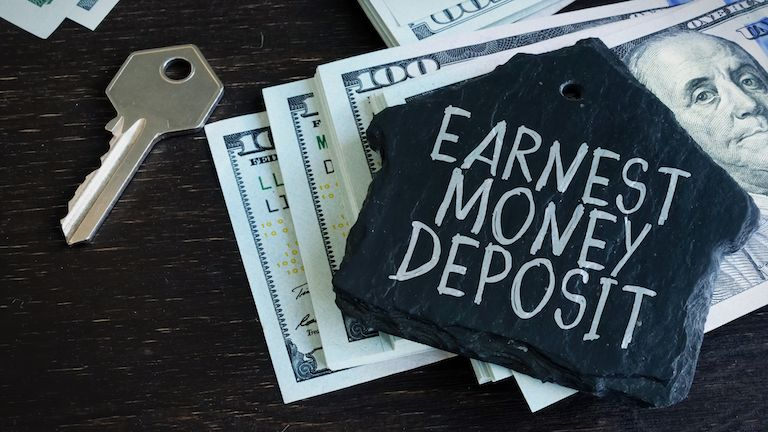
Earnest money is a good-faith deposit a buyer makes after a seller accepts an offer. It shows the buyer is committed to closing.
The Consumer Financial Protection Bureau describes it as a deposit that shows good faith on a signed purchase contract, held by a seller or a third party such as a title company. You can read that definition in the CFPB’s mortgage key terms.
So when someone asks what is earnest money, the shortest answer is a promise backed by cash. You may also hear it called an earnest money deposit or a good faith deposit.
It is not a fee and it is not extra. At closing it is credited toward what the buyer owes, so it becomes part of the purchase price.
How Does Earnest Money Work in a Cash Sale?
Many people assume this deposit only matters when a buyer uses a mortgage. In reality, what is earnest money in a cash sale is just as relevant, and the deposit can matter even more.
With a mortgage buyer, the lender’s approval process adds some structure. With a cash buyer, there is no lender, so the deposit becomes one of the few early signs of commitment.
Here is how the deposit typically moves through a cash sale.
#1 You and the buyer sign a purchase contract that states the deposit amount.
#2 The buyer delivers the earnest money to a title company, closing attorney, or broker’s trust account.
#3 The holder confirms receipt in writing.
#4 The buyer completes inspections and other contract steps during the agreed review period.
#5 At closing, the deposit is credited to the buyer’s side of the settlement statement.
#6 You receive your sale proceeds and the deal is done.
That sequence is the same whether the buyer uses cash or a loan. The difference is that a cash deal usually moves faster and has fewer outside conditions.
Who Holds the Earnest Money Deposit?
The seller does not hold the money. A neutral third party holds it in an escrow or trust account until the deal closes or ends.
The National Association of Realtors explains that this third party releases funds only when the contract terms are met, in its consumer guide to escrow and earnest money. That protects both sides.
Typical holders include a title company, a closing attorney, or a real estate broker’s trust account. Your contract should name the holder.
Knowing who holds the money is part of understanding what earnest money is in practice. If a buyer wants to hold the deposit themselves, treat that as a warning sign.
How Much Earnest Money Is Normal?
This is one of the most common questions sellers ask. A widely cited range is 1 percent to 3 percent of the purchase price, although it can run higher in competitive markets.
The NAR guide notes that deposits can be any amount and often range from 1% to 10%. It also says fixed dollar amounts, rather than percentages, are becoming more common in some regions.
Here is a simple illustration. On a $150,000 house, 1 percent is $1,500 and 3 percent is $4,500.
So how much earnest money is normal for your sale? It depends on the price, the market, and how much risk you want the buyer to carry.
Part of understanding what earnest money is is knowing there is no single required number. The amount is negotiated and written into the contract.
Is Earnest Money Required in a Cash Sale?
No law requires it for every sale. It is a customary practice rather than a universal rule.
That said, many sellers will not take an offer seriously without a deposit. If a buyer offers no earnest money, ask why.
In a cash sale, the deposit is one piece of evidence along with proof of funds. A buyer who offers neither is asking you to take their word for it.
Our guide on same day cash offer requirements explains what proof a legitimate buyer should be ready to show. It helps you tell serious buyers from talkers.
When Is Earnest Money Refundable?
The buyer’s deposit is protected only if the contract gives them a legitimate way out. These are called contingencies, and they set the rules for refunds.
A cash buyer has fewer contingencies than a mortgage buyer because no loan needs approval. Here are the ones that commonly remain.
#1 An inspection or due diligence period, when the contract allows one.
#2 A title problem that the seller cannot clear.
#3 An attorney review period, which is common in Chicago area contracts.
#4 A seller default, such as failing to deliver the property as agreed.
If the buyer cancels for one of these reasons within the deadlines, the deposit is generally returned. Missing a deadline can change that.
To see what earnest money is worth to the seller, look at how narrow the refund options are. Fewer contingencies mean the buyer has more at stake.
When Can a Seller Keep the Earnest Money?
If the buyer backs out without a valid contract reason, the seller may be entitled to keep the deposit. The CFPB notes that earnest money may be forfeited when a buyer does not perform in good faith.
Your contract language controls this. Some contracts treat the deposit as the seller’s full remedy for a buyer default.
The holder usually will not release the money to either side on one party’s say-so. In a dispute, the holder generally needs written agreement from both sides or a court order.
That is why a clean, specific contract matters. Our post on whether you can back out after accepting a cash offer covers the same issue from the seller’s side.
What Happens to Earnest Money at Closing?
At closing, the deposit is credited to the buyer. It is applied toward the purchase price and any buyer closing costs.
You will see it as a line item on the settlement statement. Your net proceeds are not reduced by it, because it is simply part of what the buyer pays.
Here is an example. If the buyer deposited $3,000 and the price is $150,000, the buyer brings the remaining $147,000, plus any closing costs they owe.
That is the practical answer to what is earnest money at the closing table. It is not a separate payment, just money that was paid early.
For a fuller picture of seller costs on closing day, see our guide to who pays closing costs. It explains how those expenses are usually split.
Earnest Money vs Down Payment vs Proof of Funds
These three terms get mixed up constantly, so here is how they differ. Earnest money comes early, a down payment comes at closing, and proof of funds shows the buyer has the money.
A down payment is part of a mortgage purchase. A cash buyer has no down payment because they pay the full price.
Proof of funds is a document, such as a bank statement or letter, showing the buyer can afford the purchase. Our post on how to verify a local home buyer explains how to check these claims.
Think of it this way. Earnest money is a small commitment, proof of funds is the evidence, and the rest arrives at closing.
Red Flags to Watch For With Cash Buyers
Most cash buyers are legitimate, but a few behaviors should slow you down. Here are the ones worth noticing.
#1 The buyer offers no deposit and no proof of funds.
#2 The buyer wants to hold the earnest money instead of a neutral third party.
#3 The buyer pressures you to sign before you can read the contract.
#4 The deposit is unusually tiny compared to the purchase price.
#5 The contract gives the buyer an unlimited right to cancel and get a refund.
That last one matters. If the buyer can walk away at any time for free, the deposit protects you very little.
Some of these buyers are wholesalers who intend to sell the contract to someone else. Our guide to cash buyers vs wholesalers shows how to tell the difference before you sign.
Earnest Money Scams and Wire Fraud
Criminals target real estate payments because the sums are large. A common trick is a fake email with new wiring instructions for the deposit.
Never send or accept wiring changes by email alone. Call the title company or attorney at a number you already trust.
If you believe you have been targeted, report it to the FBI’s Internet Crime Complaint Center. Acting quickly can improve the odds of recovering funds.
Our article on whether selling a house for cash is a scam explains other common warning signs. It is worth a read before you accept any offer.
Knowing what is earnest money and where it should go is one of your best defenses. A deposit sent anywhere other than the named holder is a red flag.
How Earnest Money Affects Your Closing Timeline

The deposit usually arrives within a few business days after you sign the contract. Your contract states the exact deadline.
If the buyer misses it, you may have the right to cancel or send a notice, depending on the contract. Do not assume the deal is still on.
In the Chicago area, contracts often include an attorney review period. During that window, either side’s attorney may propose changes or cancel under the contract’s terms.
Cash sales can close quickly once those steps are done. Our guide on how long selling a house for cash takes walks through realistic timelines.
Questions to Ask a Buyer About Earnest Money
Before signing, ask clear questions and get the answers in writing. Here are the most important ones.
#1 How much is the deposit, and when will it be delivered?
#2 Who will hold it, and in what kind of account?
#3 Under what conditions can the buyer get it back?
#4 What happens to it if the buyer cancels after the review period?
#5 Is the deposit credited at closing?
A buyer who answers these directly is usually a good sign. You will find more ideas in our list of questions to ask a cash home buyer.
Asking these questions is also the fastest way to see what is earnest money doing in your specific contract. Every contract is a little different.
Can You Negotiate the Earnest Money Amount?
Yes. The deposit is part of the offer, so it is negotiable like other terms.
You can ask for a larger deposit if you want more protection. A buyer who agrees quickly shows confidence, while one who resists may be hedging.
You can also negotiate the deadlines and conditions. Our article on whether you can negotiate a cash offer explains how to approach it without losing the buyer.
Remember that a bigger deposit is not always better. A fair amount from a verified buyer beats a large number from someone you cannot confirm.
Earnest Money When You Sell As-Is
Selling as-is does not change how the deposit works. The buyer still deposits money, and the same refund rules apply.
What changes is the inspection phase. As-is buyers usually expect to take the house as-is, so repair negotiations are limited.
Still, the contract may allow the buyer to inspect and cancel within a set window. Our guide on what to expect when selling a house for cash explains how that process unfolds.
The short version is that what is earnest money in an as-is sale works the same way. The difference is how much the buyer can renegotiate afterward.
Common Mistakes Sellers Make With Earnest Money
Most problems come from assumptions. Here are the mistakes we see most often.
#1 Accepting an offer with no deposit and no proof of funds.
#2 Letting the buyer hold the deposit personally.
#3 Missing the deposit deadline and doing nothing.
#4 Signing a contract with vague refund language.
#5 Spending the money, or counting on it, before closing.
Avoiding these five keeps your sale on firmer ground. They also make it easier to understand what is earnest money and what it can realistically do for you.
Should You Talk to an Attorney?
For most sales, the title company or closing attorney handles the mechanics. But if you are unsure about contract wording, an Illinois real estate attorney is worth the cost.
That is especially true if a dispute develops over who gets the deposit. A short consultation can prevent a long fight.
This article is educational and is not legal advice. Contract terms and local practice vary, so confirm the details with a professional.
Key Takeaways
Earnest money is a good-faith deposit a neutral third party holds until the sale closes. It is credited to the buyer at closing, so it is not an extra charge.
The usual answer to how much earnest money is normal is 1 percent to 3 percent, though fixed amounts and higher percentages are common. In a cash sale, the deposit and proof of funds work together to show the buyer is serious.
Now that you know what earnest money is, you can read your contract with confidence. If you want to explore more guides, visit the Dynasty Home Buyers blog, and when you are ready to sell, we can explain every step plainly and without pressure.